
)
Reputation Crisis Management: A Step-by-Step Playbook for Leaders
By Kurt Schmidt
|December 10, 2025
Reputation crisis management is your action plan for when trouble hits your brand—detecting issues early, responding fast, and rebuilding trust before damage becomes permanent. When a product fails or a data breach happens, you have hours, not days, to contain it. Your response in those critical first moments determines whether you’ll bounce back quickly or spend months rebuilding your reputation. Skip the preparation and you’re gambling with client trust that took years to build but only minutes to break.
Key Takeaways:
Assemble a crisis response team with three defined roles—Decision Owner who makes final calls, Spokesperson who handles all external communications, and Operations Lead who maintains client service continuity while the crisis is managed.
Run a first-hour checklist that includes freezing all outbound communications, gathering verifiable facts within 30 minutes, and issuing a holding statement that acknowledges the issue, states actions underway, and commits to the next update.
Own mistakes fully without excuses, offer tangible relief like refunds or priority support rather than just apologies, and track sentiment metrics to know when trust is rebuilding or when your approach needs adjustment.
Define Reputation Crisis Management Fast
One tweet can wipe months of pipeline. Reputation crisis management is how you detect brewing trouble, contain damage fast, and rebuild trust before clients walk. Skip the prep and you’re exposed—only 49% of U.S. companies keep a formal crisis plan in place, leaving the rest scrambling when the hit lands. The cost isn’t just headlines; it’s churn, referrals that stop, and months rebuilding what breaks in hours.
These five hits land most often. Any can spiral from local noise to full crisis in under 24 hours.
Product failure — Your deliverable breaks or misses the mark, affecting customer operations
Data breach — Client or user information leaks or gets compromised
Ethical lapse — Your team cuts corners, misrepresents facts, or crosses a trust line
Executive misconduct — Leadership behavior damages credibility and stakeholder confidence
Customer safety incident — Your work creates harm or risk to end users
Spot The Signal Before It Spikes
Set up simple social listening triggers: keyword surge, sentiment drop, or tag volume spike. Define your thresholds today—if mentions double in two hours or sentiment drops 20 points, ping your response team. Early detection turns a containable issue into a managed event instead of a viral fire.
Build Your Crisis Response Team
Speed dies when roles blur. A crisis management company operates with clear command structure—you need the same. Lock three non-negotiable seats: Decision Owner who makes the final call, Spokesperson who handles all external comms, and Ops Lead who keeps client work moving while the fire gets fought. Add backups so nights and weekends stay covered.
Print this chart, fill names, post it by the coffee machine.
Role | Primary Decision | Backup | Communication Channel |
|---|---|---|---|
Decision Owner | Final call on response strategy, legal/PR trade-offs, spend authority | COO or senior partner | Direct mobile + Slack DM |
Spokesperson | All external statements, media contact, public posts | Communications lead or trained exec | Email + scheduled check-ins |
Ops Lead | Client continuity, project prioritization, resource reallocation | Senior project manager | Slack war room + daily stand-up |
Note-Taker | Document timeline, decisions, and commitments | Junior team member with access | Shared doc + war room |
Name The Decision Owner
One person owns the final call—no committee votes during a live crisis. Delegate routine approvals so your Decision Owner stays above the weeds and focused on strategy, not Slack threads.
Assign A Single Spokesperson
One voice limits rumors and message drift. Coach your Spokesperson on holding statements and worst-case Q&A, then keep standby scripts ready so they’re not drafting under fire.
Backstop Ops With An “Air-Cover” Lead
Your Ops Lead keeps projects moving while the comms team wrestles headlines. Clients judge you on service continuity as much as statements—maintain delivery and you prove the crisis hasn’t broken your engine.
Run The First-Hour Checklist
The first 60 minutes tip trust one way or the other. Freeze, fact-find, and issue your first statement before speculation fills the void. Companies that nail early response bounce back in as little as 20–30 days versus 45+ for those who stall or stumble. This reputation management crisis response window decides your trajectory.
Run this list like a pilot’s pre-flight.
Freeze outbound posts — Pause all scheduled social, email campaigns, and ads
Time-stamp the incident — Lock when you first learned, when it started, and current scope
Spin up war-room chat — Dedicated Slack channel or group text with core team only
Pull logs — Gather system records, emails, and timeline artifacts
Confirm customer impact — Identify affected clients and severity
Brief execs — Get leadership aligned on facts and response posture
Flag legal — Loop counsel early for liability and disclosure review
Draft holding statement — Three lines: acknowledge, action, next update time
Schedule update cadence — Commit to next check-in (30 min, 2 hours, EOD)
Assign note-taker — Document every decision and commitment in shared doc
Freeze All Outbound Posts
Automated scheduling creates self-inflicted wounds. A cheerful product launch tweet during a data breach looks tone-deaf and careless. Drop a Slack command or hit pause in your tools—stop all campaigns until you clear the air.
Gather The Facts In 30 Minutes
Facts beat speculation every time. Answer what happened, when it started, how many people it affects, and who owns the fix. Use a shared doc to lock facts and sources so your team speaks from one truth.
Draft The Holding Statement
Silence hands the narrative to others. Draft a three-line skeleton: acknowledge the issue, state the action underway, and commit to the next update time. Clear it with legal in parallel, not serial, so you’re public within the hour.
Contain The Brand Crisis And Communicate
Brand crisis management runs on one loop: own it, fix it, show it. Words without action ring hollow—half-apologies and blame-shifting extend damage instead of containing it. Match your messaging to real operational changes and prove the fix in public.
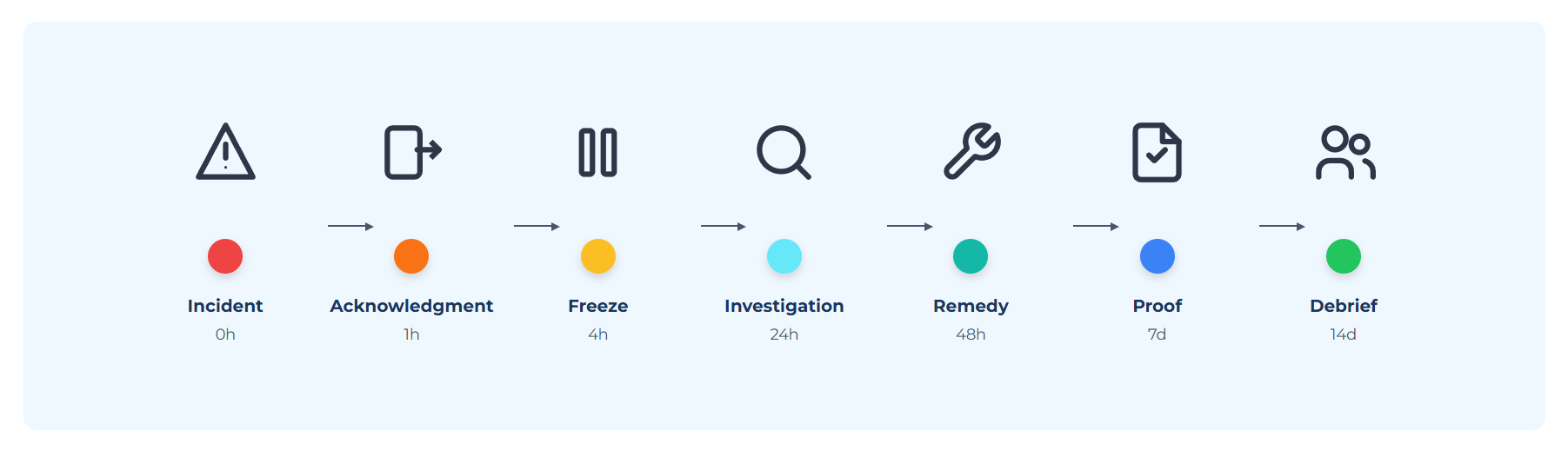
In my experience working with agencies through crises, one truth holds: own it fully without making excuses. When we missed a client commitment, we didn’t say the timeline slipped because of technical challenges. We said, “We missed our commitment to you and that hurt your business—that’s on us.” That clarity reset the conversation from blame to remedy.
Own The Mistake Publicly
Use the clear apology formula: acknowledge the harm, accept blame without hedging, and promise specific remedy. “We’re sorry for the inconvenience” doesn’t cut it—name what broke and who it hurt.
Overcorrect With Tangible Relief
Show instead of tell. Offer refunds, free support hours, or priority hotline access. Real relief moves trust faster than polished statements, and clients remember what you did more than what you said.
Keep Employees In The Loop First
Your team is your frontline amplifier. Run a 15-minute all-hands and drop an FAQ doc before the press release goes live. Staff who hear it from you first will defend you externally; staff who learn from Twitter won’t.
Monitor Sentiment, Measure, And Adapt
Track two panels: volume and velocity versus sentiment. Volume tells you reach; sentiment tells you damage. Define bounceback KPIs—share-of-voice shift, inbound ticket tone, and net promoter score movement. Adjust your message or relief offer when sentiment curves stay flat or dive, and log every tweak so you know what worked.
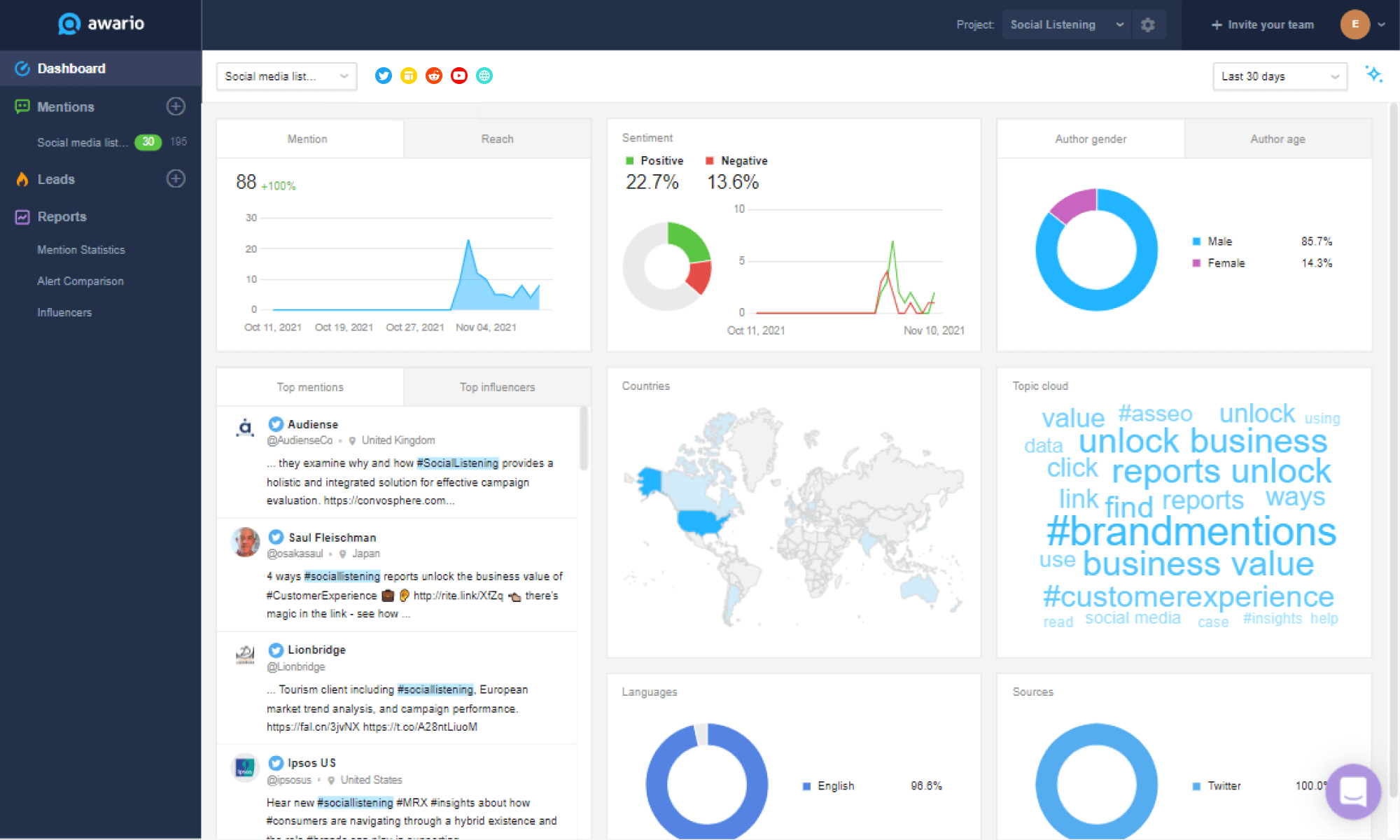
Here’s what I’ve learned after years helping teams navigate reputation management crisis response: you don’t need fancy metrics to track trust. Sometimes the simplest measures—reply tone, support ticket language, referral rate—tell you the most. If those shift positive, your message is landing.
Track Volume And Velocity
Define your daily baseline for mentions and sentiment. Set an alert threshold—double your baseline volume or 20-point sentiment drop triggers war-room activation. Quantify the noise before it turns into fire.
Define Bounceback KPIs
Measure recovery, not vanity. Track two: negative-to-positive comment ratio and time-to-neutral sentiment. If the ratio flips from 3:1 to 1:2 in 48 hours, you’re winning. If it stays stuck, iterate your message or offer.
Worried Your Dashboard Will Miss The Next Spike?
Stress-test your signals in a 30-minute Crisis Drill with us.
Book a free consultation
Adjust Message Or Offer In Real Time
Iterate publicly and log changes. Test tight cycles: publish a new statement or relief offer, watch sentiment for 30 minutes, then decide keep or kill. Real-time adaptation proves you’re listening, not just broadcasting.
Debrief And Drive Brand Reputation Protection
Run a 48-hour “hot wash” while memories stay fresh. Turn scars into standard operating procedure so the next hit hurts less. Teams that drill crises see 60% better real-world performance—simulation cadence lifts readiness and shrinks panic when live fire starts.
Run A 48-Hour Hot Wash
Capture truth before revisionist history sneaks in. Ask three questions: what surprised us, where did we stall, and what tools failed. Write it down, don’t sugarcoat it, and share it with the full response team.
Patch The Process Gap
Tie fixes to owners and dates. Add a crisis line item to your sprint board with a 14-day deadline—whether it’s better alert thresholds, updated contact lists, or new approval flows. Brand reputation protection lives in the process, not the poster.
Prove Trust Rebuild With Two Metrics
Show external proof, not internal feelings. Track review score trend on G2 or Trustpilot and measure churn delta versus your pre-crisis baseline. If scores climb and churn drops, trust is rebuilding. If not, the work isn’t done.
Grab Your Tools, Templates, Next Moves
You’ve got the five-step loop: spot the signal, assemble your team, run the first-hour checklist, contain with action, then monitor and debrief. Brand crisis management isn’t theory—it’s rehearsal and repetition. Download a war-room charter template, set your alert thresholds, and schedule your first simulation before someone tests you live.
Do this before lunch: print the team matrix, pick your volume and sentiment thresholds, and block 90 minutes next week for a tabletop drill. If you need help managing your reputation crisis or want to stress-test your plan, we’re here.
FAQs about reputation crisis management
What is crisis reputation management?
Crisis reputation management detects trouble early, assigns clear roles, and delivers operational fixes fast so trust rebounds instead of erodes. It blends honest, accountable communication with real process changes that prevent recurrence.
What are the 5 P’s of crisis management?
People, Preparation, Process, Proof, and Progress. Protect your people first, prepare scenarios and playbooks in advance, follow the process under fire, show proof of fixes through tangible actions, and measure progress with external trust signals like retention and referrals.
How do you deal with a brand reputation crisis?
Spot the signal through monitoring, activate your response team immediately, issue a holding statement within one hour, overcorrect with tangible relief like refunds or free support, and track sentiment until it stabilizes. Action matters more than apologies.
How fast should a company respond publicly after a crisis breaks?
Within one hour, publish a holding statement that names the issue, describes the action underway, and commits to the next update time. Silence hands the narrative to others, and speculation fills the void faster than you think.
Do small agencies need a formal crisis plan?
Yes. Even a two-page playbook beats ad-hoc panic when the call comes in. Defined roles, contact lists, and a first-hour checklist save the minutes that decide whether the story spirals or stays contained.
About Kurt Schmidt
Kurt Schmidt is a seasoned business advisor who helps service leaders and B2B founders achieve sustainable growth with clarity, focus, and strategic positioning. Drawing from years of experience in leadership and revenue operations, Kurt guides teams to streamline operations, strengthen differentiation, and scale confidently.
Related Articles
)
Crisis Communication Playbook: Response Templates & Strategy
A crisis communication playbook with response templates, messaging frameworks, and escalation protocols. Covers internal comms, media statements, and stakeholder management.
)
Crisis Management Agency: Strategy, Teams, Response
A crisis management agency steps in when reputational or operational disasters hit, taking control of messaging, coordination.
)
Pipeline Management: The Operating System for Revenue Growth
Pipeline management organizes and tracks sales opportunities from first contact to closed deal, turning scattered activity into predictable revenue.